
- Research Center for Drug Development Against Fire Gas Poisoning
- Doshisha University
Development of the Injectable Antidotes Against Fire Gas Poisoning
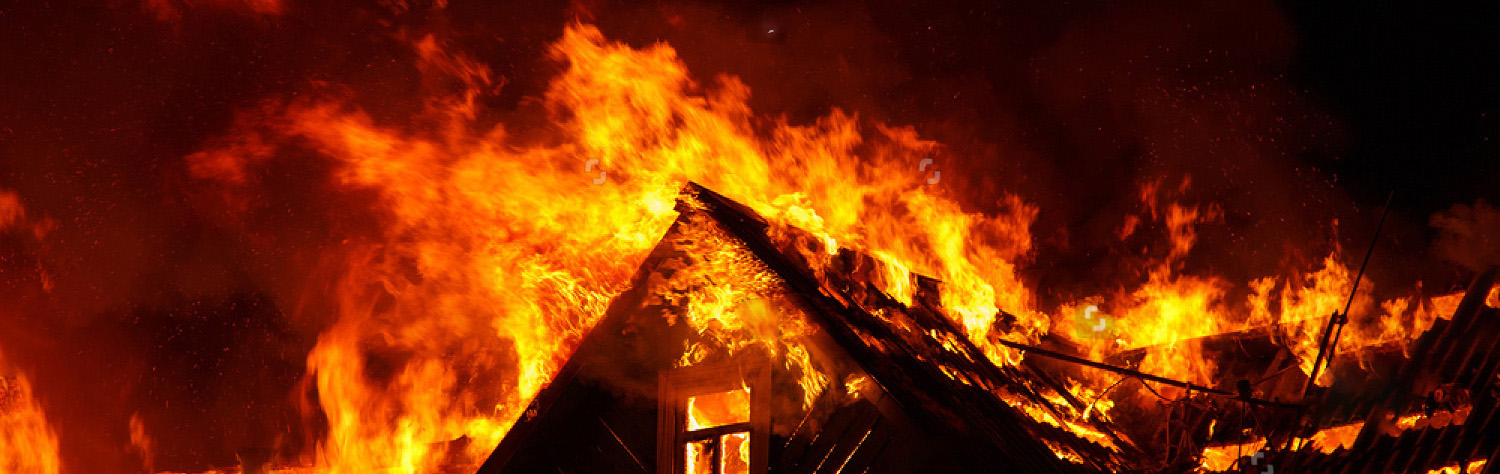
Our Aim: Fire-related carbon monoxide (CO) poisoning claims numerous lives each year. Currently, no fundamental treatment for fire gas poisoning exists in medical settings. Our research aims to develop and implement an emergency treatment drug using the water-soluble artificial hemoglobin compound “hemoCD,” developed at Doshisha University, enabling immediate on-site treatment for gas poisoning.
Technology:
A supramolecular compound, hemoCD, is composed of per-O-methylated cyclodextrin dimer and iron-porphyrin. hemoCD is the first and only-one synthetic compound that can reversibly bind O2 in water at room temperature.
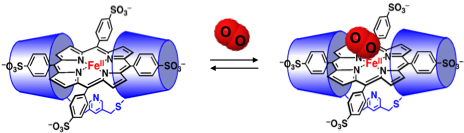
Review article: H. Kitagishi, K. Kano, “Synthetic heme protein models that function in aqueous solution”
Chemical Communications, 57, 148–173 (2021). (DOI: 10.1039/D0CC07044K)
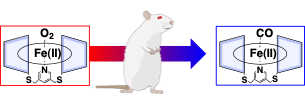
Because the CO binding affinity of hemoCD is extremely high (> 100 times more than native hemoglobin in RBC), hemoCD injected to the animal body rapidly removes CO during circulation.
As the molecular size of hemoCD is quite small, injected hemoCD was smoothly excreted in urine without any chemical decomposition.
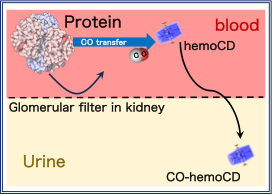
Ref. Q. Mao, A. Nakagami, M. Kodera, H. Kitagishi “The strategy of using heme proteins and synthetic porphyrins as injectable antidotes for fire gas poisoning” Chemistry Letters, 53, 11, upae203 (2024).
(DOI: 10.1093/chemle/upae203)
Recently, we demonstrated the antidote effect of hemoCD against fire gas poisoning. The mixed system, hemoCD-Twins, showed remarkable antidote effect even for the CO and HCN mixed gas poisoning. In building fire, not only CO but also HCN would generate during combustion of plastic/urethane materials.
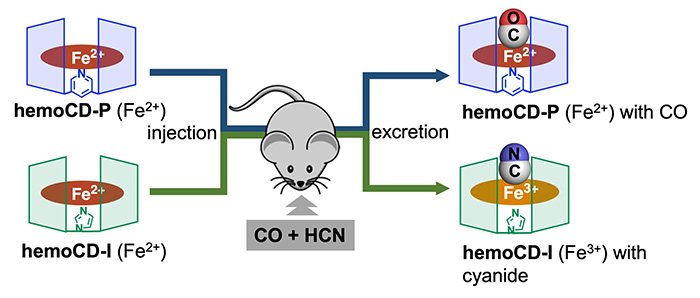
Ref. Q. Mao, X. Zhao, A. Kiriyama, S. Negi, Y. Fukuda, H. Yoshioka, A. T. Kawaguchi, R. Motterlini, R. Foresti, H. Kitagishi “A synthetic porphyrin as an effective dual antidote against carbon monoxide and cyanide poisoning” Proceedings of the National Academy of Sciences, 120, e2209924120 (2023).
(DOI: 10.1073/pnas.2209924120 )
Now we are trying to develop a Ready-to Use fire gas antidote using hemoCD systems. As hemoCD captures toxic gases during circulation and is quickly excreted in urine, hemoCD can be use as the safe and quick antidote that medical doctors can decide to use quickly. The biochemical and preclinical studies indicate promising therapeutic features of hemoCD based on pharmacokinetic behavior, minimal side effects, and effective scavenging activities against CO and HCN. Future tests in large mammals and humans will provide definite and conclusive evidence for the efficacy of hemoCD-Twins as a breakthrough antidote that might save human lives from frequently occurring gas poisoning episodes worldwide.
https://www.youtube.com/watch?v=Y-y_9Jsf26s
Chemical Communications, 57, 148–173 (2021). (DOI: 10.1039/D0CC07044K)
Because the CO binding affinity of hemoCD is extremely high (> 100 times more than native hemoglobin in RBC), hemoCD injected to the animal body rapidly removes CO during circulation.
(DOI: 10.1093/chemle/upae203)
Recently, we demonstrated the antidote effect of hemoCD against fire gas poisoning. The mixed system, hemoCD-Twins, showed remarkable antidote effect even for the CO and HCN mixed gas poisoning. In building fire, not only CO but also HCN would generate during combustion of plastic/urethane materials.
(DOI: 10.1073/pnas.2209924120 )
Now we are trying to develop a Ready-to Use fire gas antidote using hemoCD systems. As hemoCD captures toxic gases during circulation and is quickly excreted in urine, hemoCD can be use as the safe and quick antidote that medical doctors can decide to use quickly. The biochemical and preclinical studies indicate promising therapeutic features of hemoCD based on pharmacokinetic behavior, minimal side effects, and effective scavenging activities against CO and HCN. Future tests in large mammals and humans will provide definite and conclusive evidence for the efficacy of hemoCD-Twins as a breakthrough antidote that might save human lives from frequently occurring gas poisoning episodes worldwide.
The Researcher:
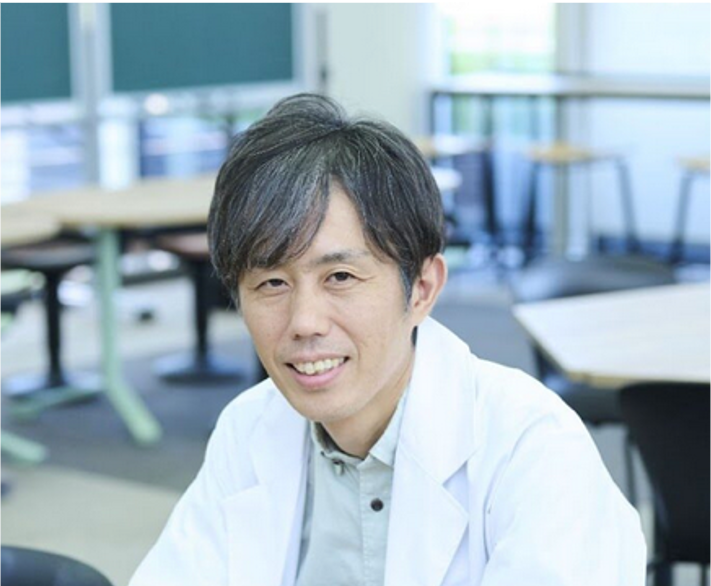
- Dr Hiroaki Kitagishi
- Professor, Doshisha University, Kyoto, Japan

- Profile: https://kitagishi-lab.doshisha.ac.jp/dr_hiroaki_kitagishi/
- ORCiD: https://orcid.org/0000-0003-4682-7217
https://www.youtube.com/watch?v=Y-y_9Jsf26s